The amount of data being generated today is growing exponentially, which is no secret to anyone, and the amount of data being connected to the internet is growing rapidly. This trend is impacting the way data centers are being built in ways that people are not expecting, particularly in terms of the size of data centers. As cloud computing and hybrid computing are adopting emerging technologies such as machine learning and artificial intelligence, which require servers to use and process large amounts of data, the computing demands continue to increase. So far, the size of data center facilities has increased to meet these demands. But bigger is not necessarily better, it often means more widespread.
The strategy of building and operating large data centers in major cities is under threat as the demand for data is growing, but it is difficult to cope with too much data. The demand is growing in towns beyond the big cities, where businesses and customers in these towns are generating and processing more and more data that cannot be fully served by large remote data centers. Instead, the increasing number of edge data centers is creating a scenario in which the number of facilities is increasing while their size is being reduced. This is the future of data centers: large-scale computing and small-scale facilities.
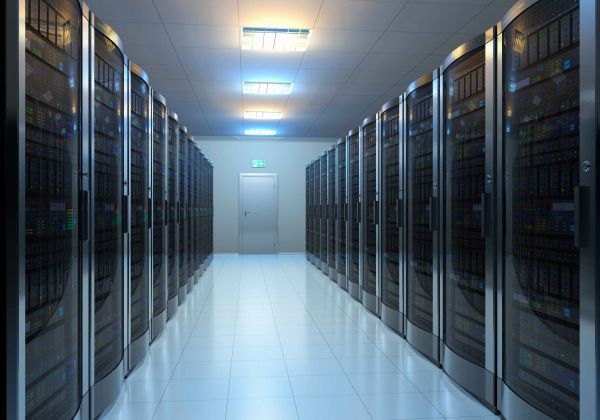
Hyperscale data center
People may think that hyperscale data centers are a development trend. However, hyperscale data centers are designed from scratch for dense scale-out, with a large number of servers that can be flipped at any time, and equipped with cooling systems that can handle a wider temperature range, as well as power that supports an exponential demand for improved technology. Hyperscale data centers are designed to be a powerful facility that provides ample power while being more efficient in data and energy.
The development trend of edge computing
Edge data centers are small, remotely managed facilities that are part of a larger data center complex, and this is the most efficient way to meet the needs of individuals and businesses. When many companies were planning to move their operations to cloud platforms offered by cloud computing giants such as Amazon, Google, and Microsoft, the edge data center trend seemed to be at a disadvantage. But now, not only has the data environment for businesses developed slowly, but more and more companies are pushing for the construction and deployment of small, on-site data centers. The demand from small and medium-sized enterprises is increasing as they are the ones who can solve the problem of latency in data processing.
Edge computing is also an effective solution to the upcoming wave of IoT devices, as it will be difficult to rely on remote cloud computing systems. On the other hand, edge computing servers can process information from IoT sensors and devices locally, which means that not only can data be collected faster, but the processing and analysis speeds can also be accelerated.
This trend is also inextricably linked to the growing distrust in cloud services. For example, the testimony of Facebook’s CEO, Mark Zuckerberg, before the US Congress, as well as the implementation of the EU’s GDPR regulation, are examples of cloud services being questioned. Edge computing, by positioning security as both a selling point and a strategy for businesses and their users: faster access to their own data, convenient storage in locations protected by the enterprise’s chosen security protocols.
Edge computing has become a part of the computing economy. It will meet important computing needs of people, enabling more data to be available more quickly in more places. The amount of data needed for increasingly complex everyday computing tasks is growing exponentially, which has pushed even the capacity and capabilities of large-scale data centers to their limits. The industry seems to be exploring smaller data centers as a more viable option and locating them more distributedly so that fast computing is not concentrated in large data centers.
With the increasing construction and deployment of edge data centers, the function of edge data centers will become more and more powerful, and their continuous development capability in artificial intelligence and virtualization makes them the key infrastructure for enterprises that hope to maintain their own data sources and data processing. With the data breach scandal of cloud computing services and the strengthening of regulatory measures, many enterprises have slowed down their strategy of phasing out internal data centers, and the number of these data center facilities is increasing.
Today, computing power is expanding outward with great force, and data center capacity is growing at a pace that is hard for people to imagine. And building edge data centers in a broader geography seems to be a better play than building a hyperscale data center.